
I first heard about PewDiePie around 2014 when my children, who were avid gamers, were enthusiastically watching his Minecraft videos. PewDiePie (also known as Felix Kjellberg) is a Swedish YouTuber and video game streamer. He began his streaming career at 21, launching his first YouTube channel in 2010 from his bedroom in Gothenburg, Sweden.
PewDiePie’s first video, “Minecraft Multiplayer Fun,” was uploaded on 2 October 2010. It has since been scrubbed from the web. In this video, PewDiePie recalls that he was streaming Minecraft and mining in a cave when he was hilariously terrified by skeletons.
Kjellberg’s early streaming efforts were raw, unfiltered, one-man (self-edited) Let’s Play videos of horror games like Amnesia: The Dark Descent. His quirky personal style and likability quickly attracted a loyal, rapidly growing fan base. Within three years, he became the most subscribed YouTuber on the platform. After watching his content, it’s easy to see why. He has a warm, disarming onscreen personality and is instantly likable.
This article examines the meteoric rise of PewDiePie (Felix Kjellberg), his impact on streaming culture, and his soft retirement in Japan.
How PewDiePie became a Streaming icon?
The biggest reason PewDiePie became a streaming legend was his ability to seamlessly and authentically connect to his audience – his self-dubbed “Bro-Army”. His greatest asset has always been his unique personality and sense of humor. He is self-aware and genuinely funny without relying on scripted jokes. The authenticity of his onscreen presence makes the viewing experience personal rather than transactional. Unlike many online influencers, it’s clear that Kjellberg is no narcissist.
PewDiePie also started without a production team, preferring to do his own photo editing. Later, he employed a small team to assist him. He reflects on those early years, saying, “I was so shy back then,” adding, “It was so weird to me, sitting alone in a room talking into a microphone. That was unheard of back at the time. No one really did it.”

One of his earliest videos is “Minecraft Multiplayer Fun,” uploaded on October 2, 2010, featuring some commentary in his native Swedish.
PewDiePie’s Streaming Career
PewDiePie was born Felix Arvid Ulf Kjellberg on 24 October 1989 in Gothenburg, Sweden. He started a university degree in industrial engineering and management at Gothenburg, but left shortly after to focus on his YouTube streaming career. A timeline of his streaming career is set out below.
- 2010 – Felix creates “PewDiePie” as a brand, beginning to upload Let’s Play videos with an initial focus on horror games, such as Amnesia.
- 2012 – Viral growth – PewDiePie’s subscriber count amplifies – he becomes one of YouTube’s fastest-growing creators.
- 2013 – PewDiePie’s YouTube channel becomes the most subscribed channel on the platform.
- 2015 – publishes a satirical self-help book, “This Book Loves You”.
- 2016 – Creates his YouTube Red Series and stars in “Scare PewDiePie” – a YouTube Premium channel (which is later cancelled).
- 2017 – Controversy erupts online about a joke stunt (considered anti-Semitic) with signage held by two Indian freelance actors hired on Fiverr. He’s also accused of sexism towards female Twitch streamers – calling them “Twitch Thots”. He subsequently loses partnerships with Disney and YouTube Red.
- 2018-20 – The Great Subscriber War with T-Series, which sparks the global “Subscribe to PewDiePie” movement.
- August 2019 – PewDiePie becomes the first individual streamer to reach 100 million subscribers. He marries his longtime girlfriend, Marzia (“CutiePie”).
- 2020 – hiatus and returns with more casual, lifestyle-focused content.
- 2022 – Felix and Marzia relocate to Japan.
- 2023-25 – Felix and Marzia welcome their first child, a son named Bjorn, and remain living in Japan. He continues to stream Minecraft on Twitch and create lifestyle content on YouTube.
PewDiePie began with Let’s Play videos and Minecraft jump scares, but his content continued to evolve over the years. This excellent ten-minute YouTube video delivers a powerful and moving tribute to PewDiePie’s streaming career, showing clips from 2011 to 2024.
Dynamic content evolution – more than just video games
When PewDiePie began streaming in 2011, his early work focused on video game commentaries of horror and action video games. His early work also included gameplay from Minecraft and Call of Duty. He became known for his Let’s Play videos of horror games such as Amnesia: The Dark Descent and The Last of Us. PewDiePie’s fan base was jokingly referred to as his “9-year-old army,” and Kjellberg often joked that these fans were “9-year-olds” poking fun at his critics who dismissed his audience as childish.
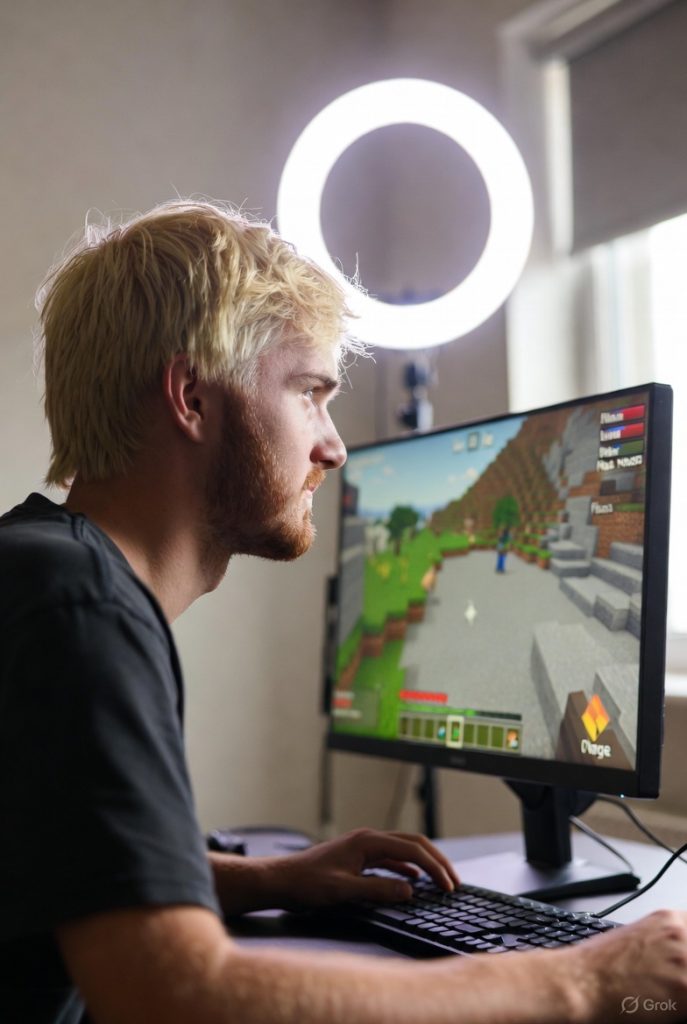
In September 2011, he began posting weekly video logs titled “Fridays with PewDiePie,” which was a weekly deviation from his usual Let’s Play videos. This weekly format included viewer requests. By December 2011, his YouTube channel had 60,000 subscribers. By 2012, this figure had climbed to 700,000.
Around the time Kjellberg’s channel became viral, and he was the number one YouTube channel in the world, he started to get serious corporate sponsorships. He signed with Maker Studios in December (a multi-channel network) and later Disney and YouTube Red. On 18 February 2013, PewDiePie’s channel reached 5 million subscribers, and he was getting coverage from The New York Times and other major news outlets.
Over the next few years, PewDiePie varied his content to include:
- Meme reviews and Reddit reactions – LWIAY (“Last Week I Asked You”) and YLYL (“You Laugh You Lose“)
- Satirical news commentary (Pew News)
- Vlogs and lifestyle updates, especially after his move to Japan
- Collaborations with other creators and his wife, Marzia
This versatility kept his channel fresh and unpredictable. He wasn’t just following trends. He was creating them.
Controversy and loss of corporate sponsorship
It’s undeniable that PewDiePie’s influence helped shape YouTube culture and significantly boosted the popularity of indie games. Despite this, Kjellberg became the subject of controversy, which arose from his subscriber competition with Indian streaming giant T-Series around 2017, as discussed below.
In early 2017, Kjellberg faced major backlash after posting a video featuring paid Fiverr users from India holding an antisemitic sign. In response, Kjellberg apologised, saying: “I am sorry for the words that I used, as I know they offended people, and I admit that the joke itself went too far,” Kjellberg said. The controversy intensified when The Wall Street Journal published a story documenting a pattern of similar content, leading Disney’s Maker Studios and YouTube to sever business ties with him. Kjellberg defended the content as satire taken out of context.
In a related Guardian article published in April 2018, What’s up, PewdiePie? The troubling content of YouTube’s biggest star, journalist Paul MacInnes, addresses some of these issues. The “troubling” content referenced by Guardian author Paul MacInnes relates to PewDiePie’s alleged sexism, racism, and promotion of alt-right narratives at different times in his streaming career. Although PewDiePie has since stated that he is apolitical and has no ties to the alt-right movement.
The Great Subscriber War – PewDiePie versus T-Series
The Great Subscriber War was a significant cultural moment in YouTube history. It was a months-long battle for platform supremacy – for the most subscribed channel on YouTube.
PewDiePie’s subscriber war with T-Series intensified after he released “Bitch Lasagna” on YouTube on October 5, 2018. The diss track, which many fans found entertaining, sparked controversy for its content. The song referenced Indian stereotypes, mocked language patterns, and included jokes about sanitation issues in India. PewDiePie also accused T-Series of artificially inflating their subscriber count with bots.
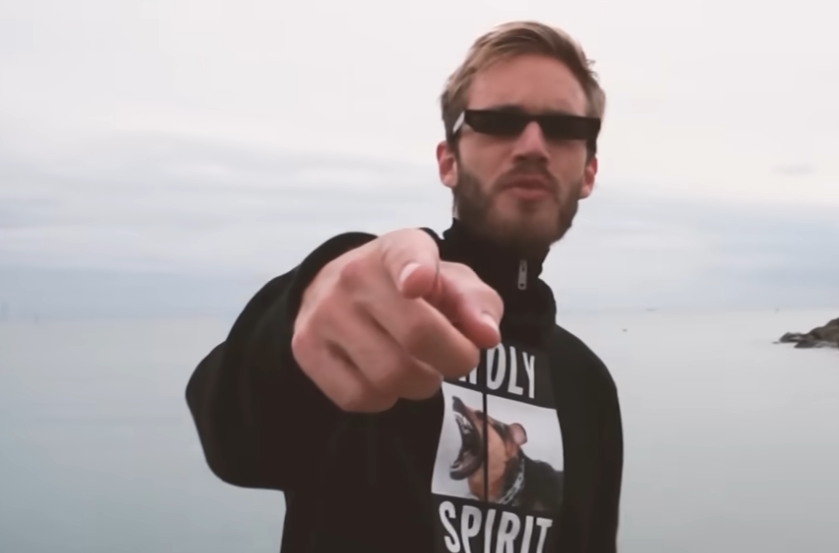
After T-Series surpassed PewDiePie in channel subscriptions, Kjellberg released a second diss track, “Congratulations,” on YouTube with collaborators, Roomie and Boyinaband. “Congratulations” sarcastically congratulates T-Series while implying that they achieved early success by selling pirated songs and referencing the chairman’s alleged tax evasion with screenshots from Wikipedia. The video also mocked T-Series for sending a cease and desist letter regarding “Bitch Lasagna”.
Ironically, the success of “Congratulations” tipped PewDiePie’s channel back into the top spot – only briefly, though. T-Series eventually overtook him in April 2019 and maintained the lead until June 2024. Unsurprisingly, in April 2019, both of PewDiePie’s videos, “Congratulations” and “Bitch Lasagne,” were banned (and geo-blocked) in India after the Delhi High Court granted an injunction in favor of T-Series.
The Great Subscriber War might have ended with T-Series claiming the numerical victory, but PewDiePie emerged with something far more valuable: freedom. His accumulated wealth from years of streaming gave him the freedom to choose his schedule, his location, and his priorities. He also had the freedom to be present for his family while maintaining a career defined by his own values and trajectory.
Growth of the Subscribe to PewDiePie movement
In response to the Great Subscriber War, PewDiePie became even more popular among his fans, who started the online “subscribe to PewDiePie” campaign. This helped his channel gain an additional 6.62 million subscribers in December 2018. Prominent YouTubers like Mr Beast supported PewDiePie by buying billboards and radio ads in North Carolina, urging his massive audience to support PewDiePie’s channel.
In a publicity stunt, Mr Beast also broadcast a video of himself saying “PewDiePie” 100,000 times over a consecutive 12-hour period. Mr Beast and his supporters also attended the Super Bowl wearing t-shirts with the words “Sub 2 PewDiePie”. Photos of the group were prominently shown in an ESPN tweet after one of the key players missed a field goal during the first quarter.
Other prominent YouTubers such as Markiplier, Jacksepticeye, and Logan Paul also made videos and tweets supporting PewDiePie. Smaller YouTubers and their loyal audience also helped promote PewDiePie in this period. The Subscribe to PewDiePie movement eventually went global, and this amplified the rivalry between PewDiePie and T-Series.
The Subscribe to PewDiePie movement was significant as it represented the power of grassroots online mobilisation. It became a battle for the future of YouTube itself. It also showed the importance of the decentralisation of the Internet, where it could be a place where individual voices could potentially compete with corporate giants. The Scandinavian quirkiness of PewDiePie represented the do-it-yourself ethos that defined the early era of online content creators.
PewDiePie in 2025 – stats that show his reach
By 2025, PewDiePie had around 110 million subscribers on YouTube. This places him among some of the largest creators on the platform. While MrBeast has surpassed him in subscribers, PewDiePie remains a household name with global recognition and a rich content library that still attracts millions of views. His YouTube channel (PewDiePie on YouTube) is a cultural touchstone for gaming fans, casual viewers, and long-time internet veterans alike.
As journalist Max Read wrote in Intelligencer:
“Kjellberg, for his part, is seen as a standard-bearer for the oppressed YouTuber subject to the whims of YouTube’s corporate masters — a symbol of the ongoing tension between YouTube and the culture that it spawned.”
On Twitch, PewDiePie has about 1.76 million followers, and these numbers are modest compared to top Twitch streamers. Nonetheless, his content remains authentic and relatable. Moreover, Kjellberg seems content with these numbers. He built his career on consistent videos, series, and a personal brand that reaches beyond live numbers. For a snapshot of his Twitch presence, you can check out PewDiePie on TwitchTracker.
Blueprint for digital longevity
PewDiePie was just a kid when he started – only 21 streaming from his parents’ home in Sweden. He’s now 36 and a husband and father. By October 2025, PewDiePie’s estimated net worth is somewhere between $40 million and $90 million, derived from streaming, merchandise, and investments.
His content has matured considerably, including video logs of his life in Japan with his wife and child. After Kjellberg relocated to Japan with his wife, Marzia, and welcomed their first child, he shifted to a more relaxed upload schedule. He now focuses on family and personal fulfillment over algorithmic demands. He also delivers intelligent and nuanced video content on tech and privacy issues, as well as his personal hobbies.
Guardian journalist Paul MacInnes captured something essential about PewDiePie in 2018, noting that he is “funny, intelligent, innovative and highly charismatic” with “one of the world’s biggest public platforms.”
Kjellberg’s streaming career fundamentally shaped what YouTube became. He proved that authenticity could outperform slick corporate polish and showed that individual creators could potentially compete with traditional media giants. His longevity comes from trust built over years of a consistent voice and an honest connection. Fans who grew up with his horror Let’s Play videos and early Minecraft worlds still check in as his streaming career evolves.

0 Comments