
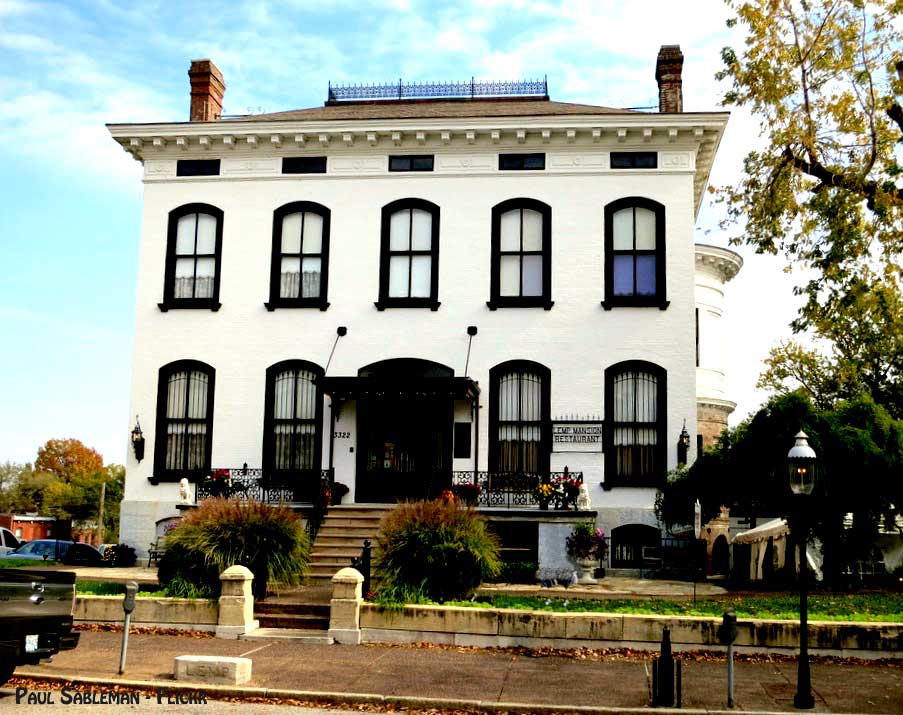
The Lemp Mansion is one of America’s most haunted houses. This historic landmark sits in Benton Park, St. Louis, Missouri. A successful brewery magnate, William J Lemp Sr., purchased this monstrous 33-room house in 1890. His family and descendants lived there for several decades.
The Lemps were an enterprising, hard-working German immigrant family. They arrived in the United States in the 1800s and built a brewery fortune – the William J Lemp Brewing Co. Until Prohibition began on January 17, 1920, the William J. Lemp Brewing Co. confidently dominated the St. Louis beer market.
An unfortunate series of family tragedies further undermined the Lemp family business. Four suicides occurred between 1904 and 1949. Allegedly, various members of the Lemp family still haunt the mansion today.
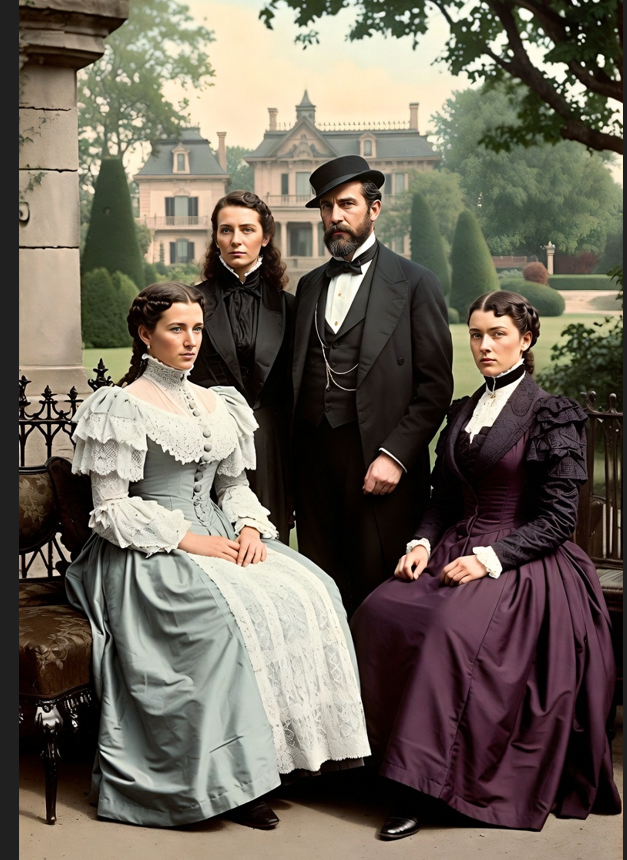
This article explores the history of the Lemp family brewing dynasty, the construction of the Lemp Mansion, and its haunted history.
The Lemp Mansion – A brief history
The Lemp Mansion in St. Louis, Missouri, stands as one of America’s most notorious haunted locations. It has a dark history that has captivated paranormal enthusiasts for decades.
First built in 1890, the Lemp Mansion underwent significant renovations in 1911, including the conversion of parts of the house into offices for the Lemp Brewery. The Lemp family lived in the house until 1949, when Charles Lemp died by suicide. In 1950, the Lemp estate sold the mansion and converted it into a boarding house. In the 1960s, the construction of Interstate 55 contributed to the destruction of much of the grounds and one of the carriage houses.
Tragedy behind the grandeur
The mansion’s grandeur conceals a tragic legacy marked by multiple suicides, mysterious deaths, and devastating financial ruin that befell the family across several generations.
The mansion’s haunted reputation stems largely from the profound tragedies that occurred within its walls. Four members of the Lemp family took their own lives in the house, including William Lemp Sr., who shot himself in 1904 after the death of his favorite son and the loss of his best friend.

His son, William Lemp Jr., followed suit in the same building in 1922. Two other family members met similar fates in subsequent years. These tragedies, combined with the family’s ultimate decline and the mansion’s period of abandonment, created an atmosphere that many believe trapped residual energy and restless spirits within the property.
Today, the Lemp Mansion operates as both a restaurant and inn, allowing visitors to experience its eerie atmosphere firsthand. Guests and staff have reported countless paranormal experiences, including unexplained footsteps, phantom piano music, sudden temperature drops, glasses flying off tables, and apparitions of former family members.
Unsurprisingly, numerous ghost-hunting television programs and paranormal investigation shows have featured the mansion. This exposure cemented its status as a compelling destination for those seeking encounters with the supernatural. Its combination of verifiable historical tragedy and persistent modern-day phenomena has made it one of the most authentically haunted locations in the United States.
The Lemp Legacy: A Brewing Empire’s rise and fall
The Lemp Mansion represents a pivotal chapter in American brewing history. One of St. Louis’s most influential industrial dynasties made this luxurious residence their home. The Lemp family’s brewing empire began with Johann Adam Lemp, a German immigrant who arrived in St. Louis in the late 1830s. Johann Lemp pioneered the production of lager beer in America. His son, William J. Lemp Sr., transformed the family business into a powerhouse that would eventually become the largest brewery in St. Louis and one of the most successful in the entire nation. The mansion itself became the family’s primary residence in the 1860s, symbolizing their ascent to the pinnacle of Gilded Age wealth and social prominence.
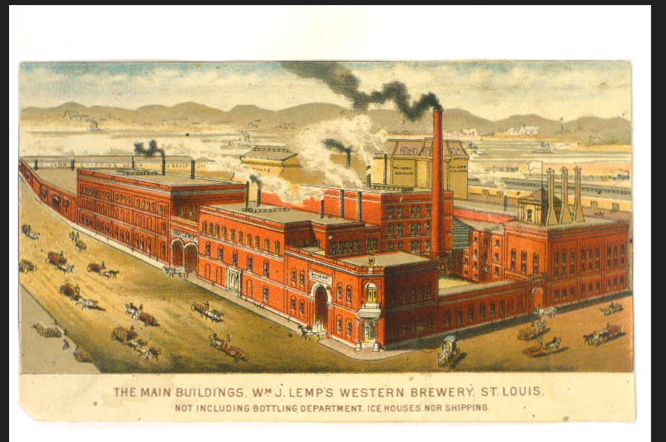
At the height of their success in the late 19th and early 20th centuries, the Lemp Brewing Company dominated the American beer market, producing millions of barrels annually and establishing an extensive national distribution network. By 1895, the Lemp Brewery employed 700 people. It ranked as the eighth-largest brewery in the United States. Global markets in India, the West Indies, London, Paris, and Berlin also imported its products.
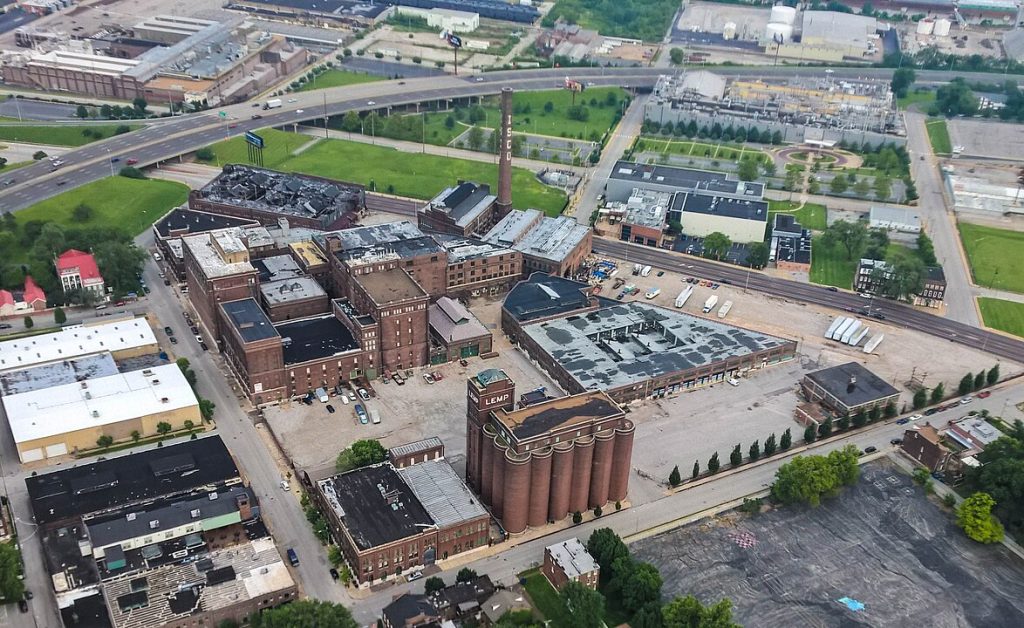
The mansion reflected this prosperity with its lavish interiors, ornate architectural details, imported furnishings, and state-of-the-art amenities that were rare for the era. The family hosted elaborate social gatherings and maintained their position among St. Louis’s elite society, with the mansion serving as both a private sanctuary and a showcase of their industrial achievement. The mansion was connected to the brewery complex through a labyrinthine network of underground tunnels and caves. These caves were used for both business purposes and as part of the family’s extensive estate.
The Fall of an Empire: How Prohibition destroyed the Lemp Dynasty
However, the mansion also witnessed the family’s dramatic downfall, making it a monument to both triumph and tragedy in American industrial history. The advent of Prohibition, combined with changing market conditions and family misfortunes, led to the brewery’s closure and sale in 1922 for a fraction of its former value. The once-grand estate came to symbolise lost fortunes and faded glory. It eventually fell into disrepair before being saved from demolition and restored.
On June 28, 1922, the Lemp Brewery, which had been valued at $7 million with factories covering ten city blocks, was sold at auction to the International Shoe Company for only $588,500.
Today, the Lemp Mansion stands as a tangible connection to St. Louis’s brewing heritage and the broader story of immigrant success, industrial ambition, and the volatile nature of American fortunes during the nation’s rapid industrialization period.
Construction and design of the Lemp Mansion
The Lemp Mansion’s construction in the early 1860s marked the beginning of what would become one of St. Louis’s most architecturally significant private residences. The building was originally erected around 1838 as a more modest structure. William J. Lemp Sr. acquired the property in the 1860s and undertook extensive renovations and expansions, transforming it into the imposing Victorian mansion that stands today. Lemp recognized the property’s strategic location in the Benton Park neighborhood, situated conveniently near the Mississippi River and the family’s growing brewery operations on Cherokee Street.

The timing of the construction and renovation coincided with the Lemp Brewing Company’s dramatic expansion, as the family’s lager beer was gaining widespread popularity and generating the substantial wealth needed to create such an impressive estate.
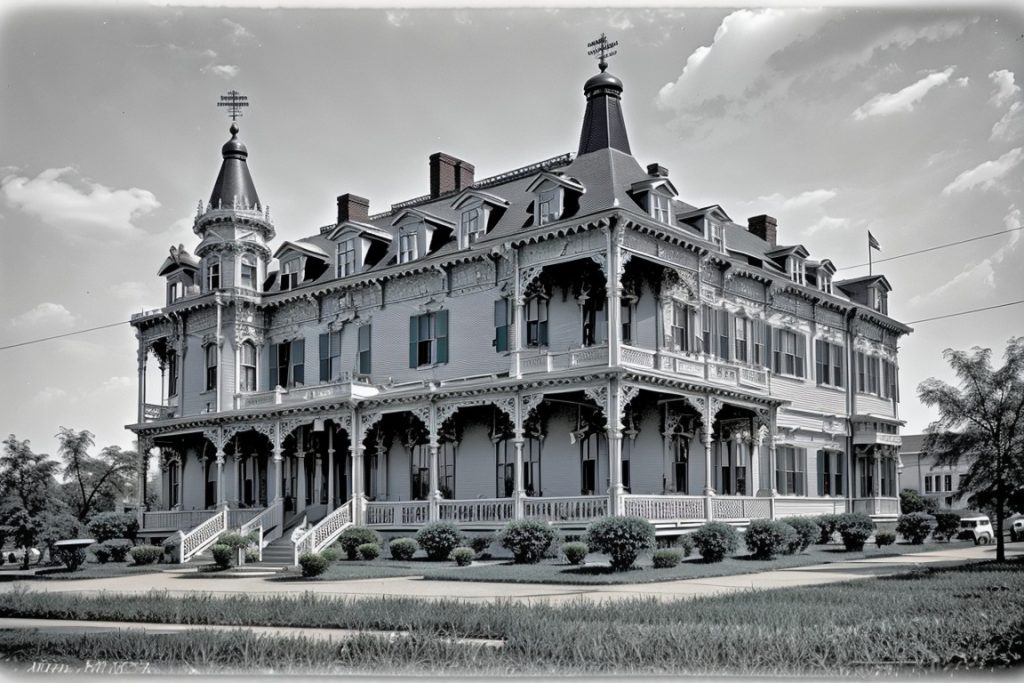
The mansion’s architectural design reflected the ornate Victorian sensibilities of the era, incorporating elements of Italianate style, which was fashionable among America’s wealthy industrialists during the mid-19th century. The structure featured high ceilings, elaborate woodwork, grand staircases, and spacious rooms designed to accommodate both family life and elegant entertaining.
The builders used high-quality materials and craftsmanship throughout, including imported marble, fine hardwoods, and decorative plasterwork, which showcased the family’s refined taste and financial resources. Large windows were strategically placed to maximize natural light, while the layout of rooms allowed for the formal separation of public and private spaces, typical of upper-class Victorian homes.
What lies beneath – elaborate tunnels and caves
One of the most distinctive features incorporated during the mansion’s development was its connection to an extensive system of natural caves and man-made tunnels beneath the property. These subterranean passages linked the mansion directly to the Lemp Brewery complex, serving practical purposes for the family’s business operations while also providing private access between home and workplace.
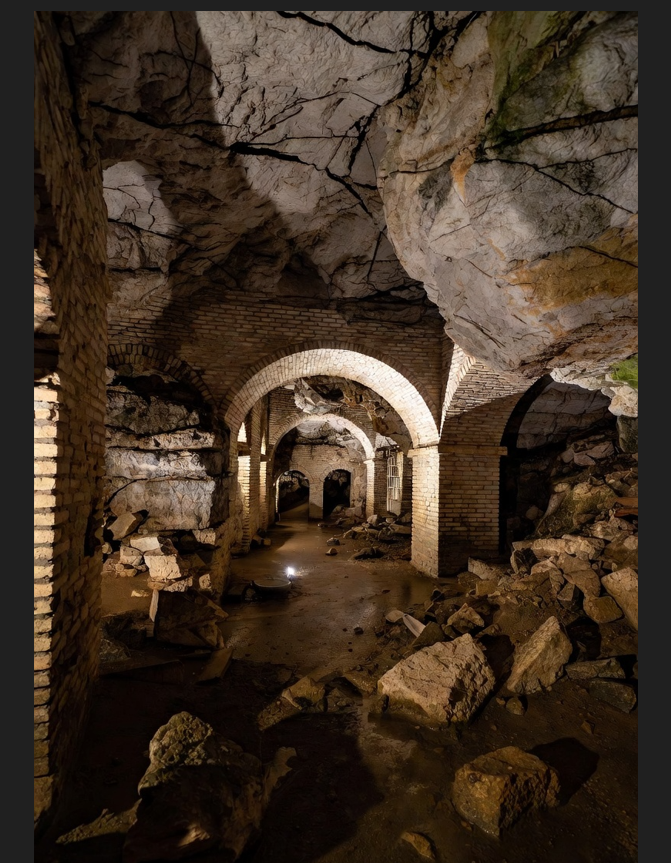
Significantly, the caves had naturally cool temperatures year-round. This made the location attractive for Johann Adam Lemp as an ideal place to store beer. These caves were expanded and reinforced during the 1860s construction period. This underground network added an element of mystery and utility to the estate, creating a hidden world beneath the elegant Victorian structure above. The combination of above-ground grandeur and below-ground functionality made the Lemp Mansion a unique architectural achievement that perfectly suited the needs of a thriving industrial family.
The Lemp family history
William Lemp Jr had groomed his youngest son, Frederick, to take over the family brewing business, which by 1904 was doing a roaring trade. However, tragically in 1901, Lemp’s youngest (and favorite) son, Frederick, died suddenly of heart failure (aged 28) and William Lemp Jr never recovered from the grief.
A few years later, in 1904, William Lemp’s best friend, Frederick Pabst, died suddenly. Grief-stricken by the accumulation of both deaths, William Lemp committed suicide by a fatal gunshot wound to the head on the morning of February 13, 1904. A few years later, Lemp’s wife (and Frederick’s mother) died of cancer in the Lemp Mansion.
Billy Lemp and the Lavender Lady
William Lemp Jr’s son, William J “Billy” Lemp Jr, then took over the reins of the family business. In 1899, Billy married Lillian Handlan, the daughter of a wealthy railroad magnate from St. Louis. They had one son, William III. In 1909, the marriage broke down with an acrimonious divorce and custody battle over their only son, William III. Billy Lemp claimed that Lillian wore the color lavender excessively to attract other men, and he cited her for infidelity.

Lillian Handlan became known as the “Lavender Lady” because of her fondness for all things lavender. During their highly publicised divorce, she alleged that Billy Lemp deserted her and claimed cruel treatment and emotional abuse. She was granted custody of their only child, William III, and Billy was given visitation rights and had to pay $6,000 a year in alimony. Lillian Handlan Lemp (the ‘Lavender Lady), never remarried and lived to a ripe old age of 83.
A second generation of Lemp Family tragedies
Elsa Lemp Wright, the youngest daughter of William J. Lemp Sr., and the sister of Billy Lemp, became the third member of the Lemp family to die by suicide. She shot herself on March 20, 1920, at the age of just 37. After a turbulent marriage to Thomas Wright that ended in a bitter and highly publicized divorce in 1909, Elsa had struggled with acute indigestion and severe depression. She reportedly never recovered from the emotional toll of the proceedings, which exposed intimate details of her life to the public. She ended her life in her bedroom at the Lemp Mansion on DeMenil Place, leaving behind no note to explain her final decision. Her cause of death was suicide – gunshot wound to the heart. Her death deepened the dark legacy surrounding the Lemp family, adding another tragic chapter to a story already marked by heartbreak, financial ruin, and despair.

In the 1920s, Billy Lemp married a widow, Ellie Limberg, who was the daughter of another prominent brewing family. However, Billy Lemp Jr, became despondent about the failure of his business after Prohibition (1919). He briefly tried to reinvent the Lemp Brewery by introducing nonalcoholic beer, but this venture wasn’t profitable. His failure to modernise his operations also contributed to the failure of the Lemp Brewery. On December 29, 1922, he shot himself in the chest in his office, the same room where his own father had committed suicide.
Billy Lemp’s son, William Lemp III, now an adult, unsuccessfully tried to rebuild the Lemp business. By the early 1940s, the Lemp Brewery was bankrupt. Afterward, in 1943, William III died suddenly of a heart attack.
The fourth suicide in the family was Charles Lemp, Billy Lemp’s unmarried brother, who had been treasurer and vice-president of the Lemp family business. By 1929, he had become reclusive and moved back into the Lemp mansion. At the age of 72 on May 10, 1949, he shot himself in the head. He was the only Lemp to leave a suicide note, which read “In case I am found dead, blame it on no one but me.” In 1949, the Lemp Mansion was turned into a boarding house. In 1975, Richard D. Pointer bought the Lemp Mansion, renovated it, and converted it into a restaurant, which the Pointer family currently runs.
Architectural facts about the Lemp Mansion
William J Lemp Sr. used his brewery fortune to transform the 33-room house into a showpiece of Victorian architecture. Workers installed a radiator system in 1884. This happened only five years after inventors had created radiant heat.
Lemp removed the grand staircase and instead put in an open-air elevator (which no longer exists in the house). Later on, further renovations happened. A decorative mantlepiece made of Italian marble also graces the home.
The parlor has a lavish interior with hand-painted ceilings. Other mantles constructed of African mahogany adorn various rooms. There is also an atrium filled with exotic birds and plants.
The main bathroom has a glass-enclosed free-standing shower—unusual for its time. Lemp apparently found this in Italy and had it sent to St Louis to add to the house.
Lemp also installed a barber chair and a sink with glass legs in the house.
All bedrooms are located on the second floor. This includes the “death room” where two of the Lemps shot themselves in the head.
The Haunted History of the Lemp Mansion
The Lemp Mansion’s reputation as a paranormally active location rests on decades of reported supernatural encounters. These range from subtle disturbances to dramatic phenomena. Visitors and staff have consistently reported hearing phantom footsteps echoing through empty hallways. These sounds can be heard particularly on the upper floors where family bedrooms once sat.
The sound of piano music drifting from the mansion’s parlor when no one is present has become one of the most frequently reported occurrences. People often attribute this to the spirit of Lillian Lemp, who was known for her musical talents. Guests staying overnight in the mansion’s converted inn rooms have described feeling unexplained cold spots. They sense unseen presences watching them and experience the unnerving sensation of someone sitting on the edge of their beds. Witnesses have seen objects moving on their own. Glasses slide across bars, doors open and close without human intervention, and items disappear only to reappear in unexpected locations days later.
The Mansion also included creepy underground, damp tunnels which connected it to the Brewery next door. The underground tunnels also provided natural refrigeration for the beer, as well as a damp and scary vibe. Some paranormal investigators say the tunnels themselves and the old Brewery are the true haunted locations, not the Lemp Mansion.
Paranormal experiences and sightings
Among the most compelling reports are actual apparition sightings that have occurred throughout the mansion’s various rooms. The spirit of William Lemp Sr. has allegedly been seen in his former office, where he took his own life in 1904, often appearing as a shadowy figure or a fleeting glimpse of a man in period clothing.
Notably, the ‘Lavender Lady’, believed to be Lillian Handlan Lemp, has been spotted gliding through hallways wearing a Victorian-era gown, sometimes accompanied by the scent of lavender perfume that lingers inexplicably in certain areas.

Perhaps most disturbing are the reports from the attic area, where the Lemp’s son Charles kept his mentally disabled brother Edwin hidden from public view. Visitors describe overwhelming waves of sadness and despair, sudden panic attacks, and the unsettling sensation of unseen hands touching or grabbing them.
Additionally, the basement and tunnel systems beneath the mansion generate their own catalog of frightening experiences. People have reported hearing disembodied voices. They also report feeling followed through dark corridors. Electronic equipment frequently malfunctions in this area, and device batteries drain without explanation.
Testimonies from guests, staff, and paranormal investigators
The mansion’s staff members, who spend countless hours in the building, provide some of the most credible testimonies about its paranormal nature. Restaurant employees reported tables being reset after closing. Silverware appears rearranged in patterns they didn’t create. Visitors hear the distinct sound of a party or gathering coming from upstairs when the second floor is empty. Housekeeping staff refuse to enter certain rooms alone, particularly the William Lemp Suite and the Charles Lemp Suite. They report feeling watched, hearing their names whispered, and finding doors locked that had been open moments before.
Additionally, overnight guests describe waking up to the sounds of children laughing or crying. They saw shadows moving across walls and capturing unexplained anomalies in photographs taken throughout the property.
Professional paranormal investigation teams who have studied the mansion report consistent electromagnetic field fluctuations. Electronic voice phenomena recordings appear to contain intelligent responses to questions. Documented temperature drops of 10-20 degrees occur in specific locations without any natural explanation. Several investigators reported that unseen forces physically manipulated their equipment.
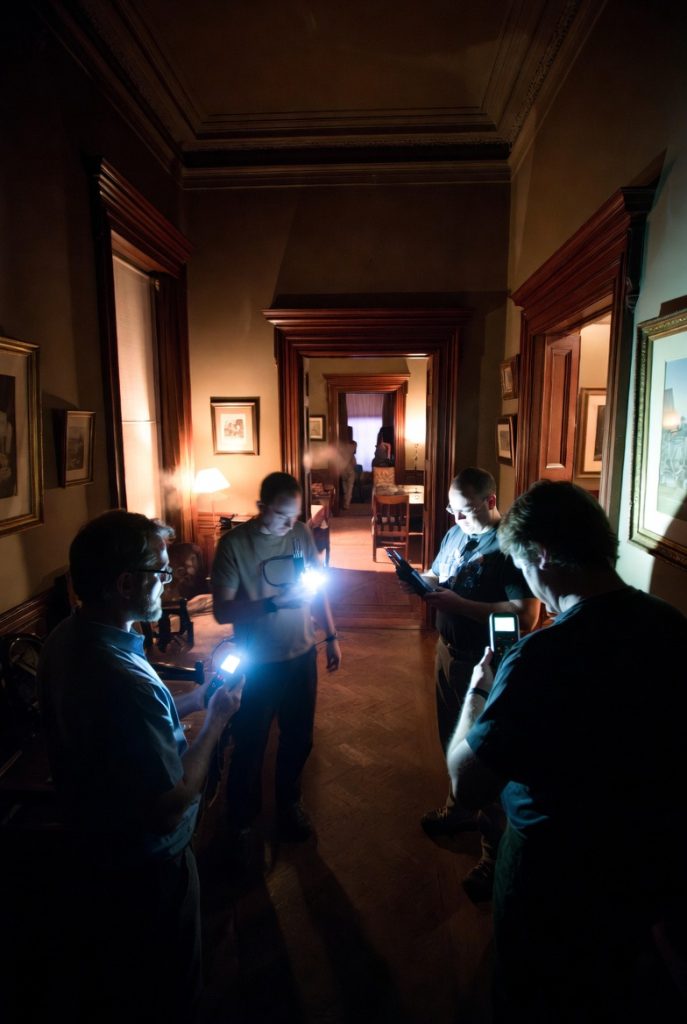
Cameras were moved, and recorders switched off. Team members describe experiencing physical sensations ranging from touches to more aggressive encounters.
Unraveling the Lemp Mansion hauntings
Paranormal researchers and historians have developed several theories to explain the intense supernatural activity reported at the Lemp Mansion, most of which center on the concentrated trauma experienced within its walls. The most prevalent theory suggests that the multiple suicides and sudden deaths created a residual energy imprint. The extreme emotional distress of the final moments was somehow recorded into the physical structure of the building itself.
Residual energy and place memory – imprinted trauma
The concept of “place memory” proposes that locations can absorb and replay traumatic events. This particularly happens when those events involve violent or emotionally charged deaths. The extended suffering of the Lemp family spanned multiple generations. It included not just deaths but also mental illness, financial devastation, and profound grief. This may have created layers of psychic residue that continue to manifest as paranormal phenomena.
Intelligent hauntings and unfinished business
Another theory focuses on the possibility of intelligent hauntings. It suggests that the spirits of deceased family members remain bound to the mansion due to unfinished business. They may be unable to move beyond their earthly attachments. William Lemp Sr. ended his life while still deeply engaged in business affairs and family responsibilities. This might have left his spirit confused or unwilling to depart.
Similarly, the circumstances surrounding Edwin Lemp could explain the particularly intense activity in the attic area. He spent much of his life confined to the mansion’s attic and died under mysterious circumstances in 1970. Some paranormal experts believe that the family’s emotional attachment to their lost fortune and former glory keeps them tethered to the physical manifestation of their success.
The mansion’s unique physical characteristics also play a role in theoretical explanations for the hauntings. The extensive cave and tunnel system beneath the property creates unusual acoustic properties and electromagnetic conditions. Some researchers believe these could contribute to paranormal activity or at least create an environment conducive to such phenomena. The limestone caves naturally produce electromagnetic fields and contain flowing water. Paranormal investigators often associate both elements with increased supernatural activity.
How abandonment and modern activity may amplify the hauntings
Additionally, the Lemp Mansion’s period of abandonment and deterioration in the mid-20th century, before its restoration, may have created a void. This attracted spiritual energy or allowed existing supernatural presences to strengthen without human interference. Some theorists even suggest that the building’s current use as a public venue might actually feed and amplify whatever paranormal forces exist within the mansion. Thousands of visitors bring their own energy and expectations, creating a self-perpetuating cycle of supernatural activity.
Final thoughts
These days, the Lemp Mansion has found new life as a restaurant and inn under the ownership of the Pointer family. They have carefully preserved this historic St. Louis landmark while embracing its supernatural reputation. Today, the mansion serves multiple purposes. It offers fine dining, operates as a bed and breakfast, and ranks among America’s most investigated paranormal hotspots.
The venue has become a popular destination for ghost hunters and paranormal enthusiasts from around the world. The Lemp Mansion regularly hosts murder mystery dinners and special Halloween events. These capitalize on its eerie atmosphere and tragic past. Its haunted reputation draws serious paranormal investigators, including The Atlantic Paranormal Society (TAPS), whose 2010 investigation appeared on the popular television series Ghost Hunters.
Unsurprisingly, Life Magazine listed the Lemp Mansion among “America’s 9 Most Haunted Houses,” cementing its status in American paranormal lore. A local Missouri legend suggests that the building harbors multiple spirits beyond just the Lemp family members. This claim continues to intrigue visitors and investigators alike. I’ve also created a 16-minute video on TikTok that reproduces the material in this blog article.
In summary, the Lemp Mansion offers a unique glimpse into the haunted history of America’s Gilded Age. Before visiting the Lemp Mansion, make sure you check out the current owners’ Facebook page and X account (@TheLempMansion). They regularly share updates about events, dining options, and overnight stays in one of America’s most legendary haunted locations.

0 Comments